
Project Description: Goals and Work Stages
The project “Forced Labor 1939 - 1945. Memory and History" aims at permanently securing, allocating and in-depth indexing of audio and video interviews and their accompanying materials.
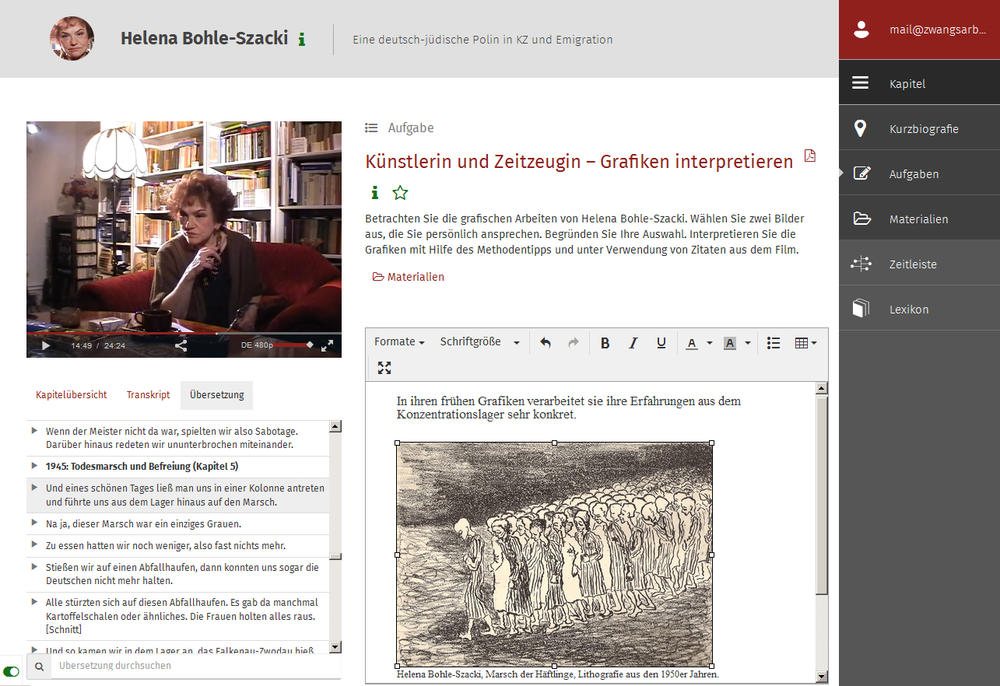
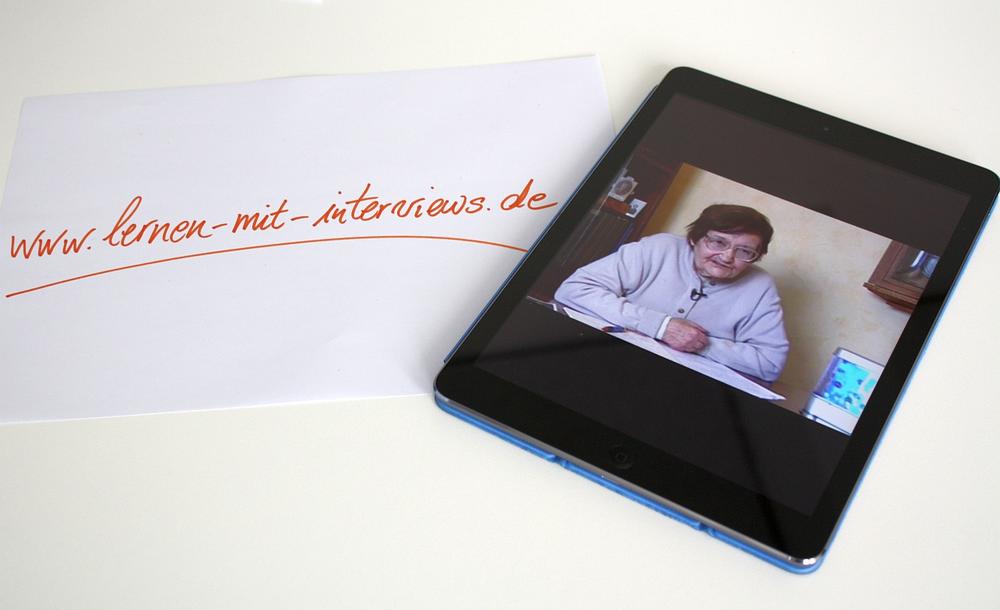
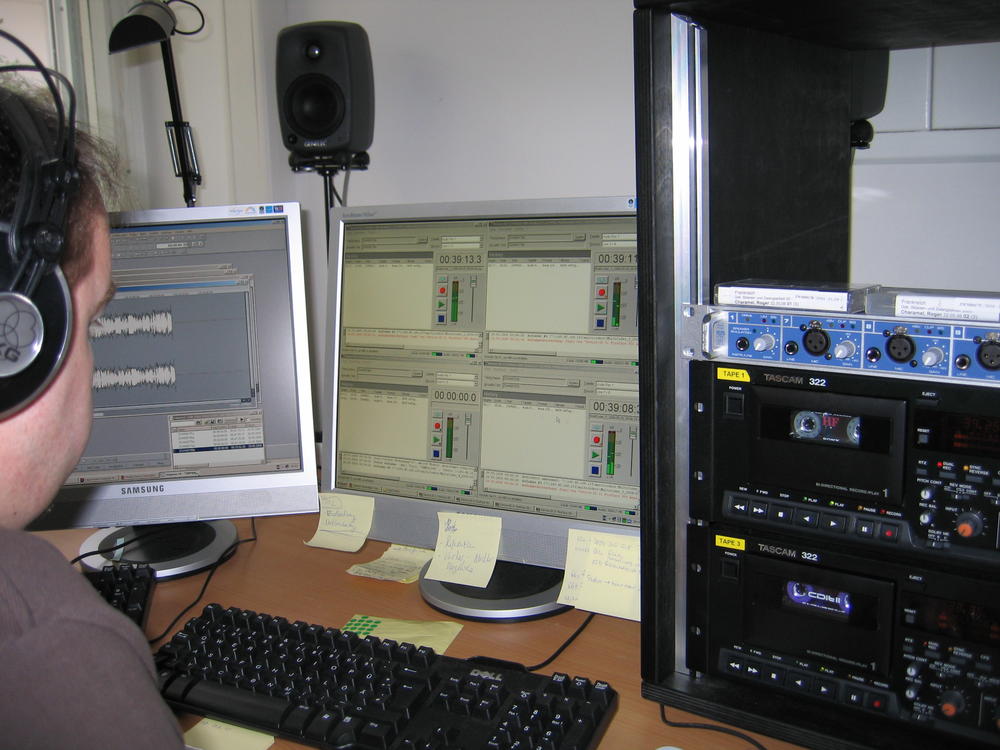
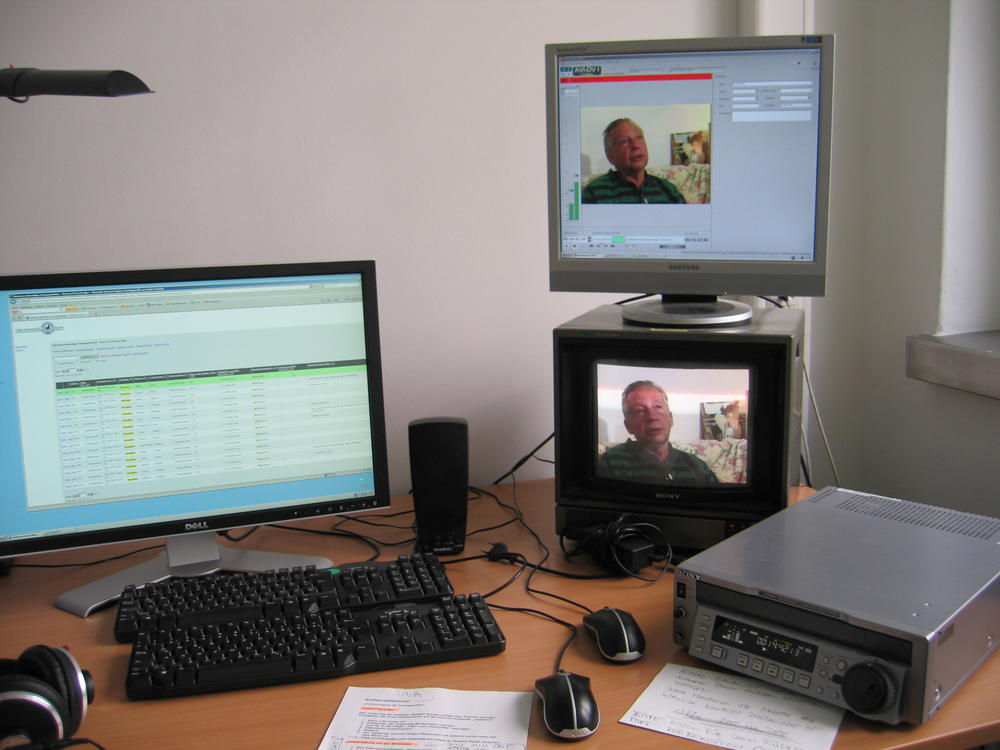
The main steps involved are archiving, digitizing and building an online platform, translating, segmenting and indexing of the interviews, as well as preparing educational material. An introductory film (in German) provides brief information about the interview collection as well as the work and objectives of the project.
Whereas the interviews collection was created in 2005-2006, the cooperation project "Forced Labor. Memory and History" started in the autumn of 2007. As a first step, the interview tapes were digitized and qualitatively improved. The archive has been online since January 2009. From mid 2010, a new release of the online archive now offers an improved search and user functionality. Educational materials based on the interviews have been developed, and complement the online selection. Further translation and indexing work is proceeding.
Overview of the Individual Project Components
- Archiving and Inventory
- Digitization
- Online Access
- Translation
- Segmentation and Indexing
- Historical and Political Education
Archiving and Inventory
The German Historical Museum provides the professional inventory and sustainable storage of about 2000 audio and video tapes and their accompanying materials. This is ensured by the ideal conditions for conservation in the film library of the German Historical Museum.
Digitization
The Center for Digital Systems (CeDiS) at the Freie Universität Berlin digitized about 2000 video and audio recordings. The recordings were digitized and qualitatively improved by the Digas System of the company David Systems, without changing the content of the interview. The file formats Broadcast WAVE (for the 393 audio interviews) and DV (for the 190 video interviews) are feasible and versatile intermediate formats. For the use on an online platform, the files were converted to an internet-capable format (audio: MP3, video: MPEG4 Codec H264 and FLV onVP6).
Online Access
The Center for Digital Systems (CeDiS) has developed an interactive web-based archive platform. Upon registration, the following materials are available:
- Interviews (audio / video)
- Transcripts
- Translations (if available)
- Photographs and documents
- Short biographies
- Further information
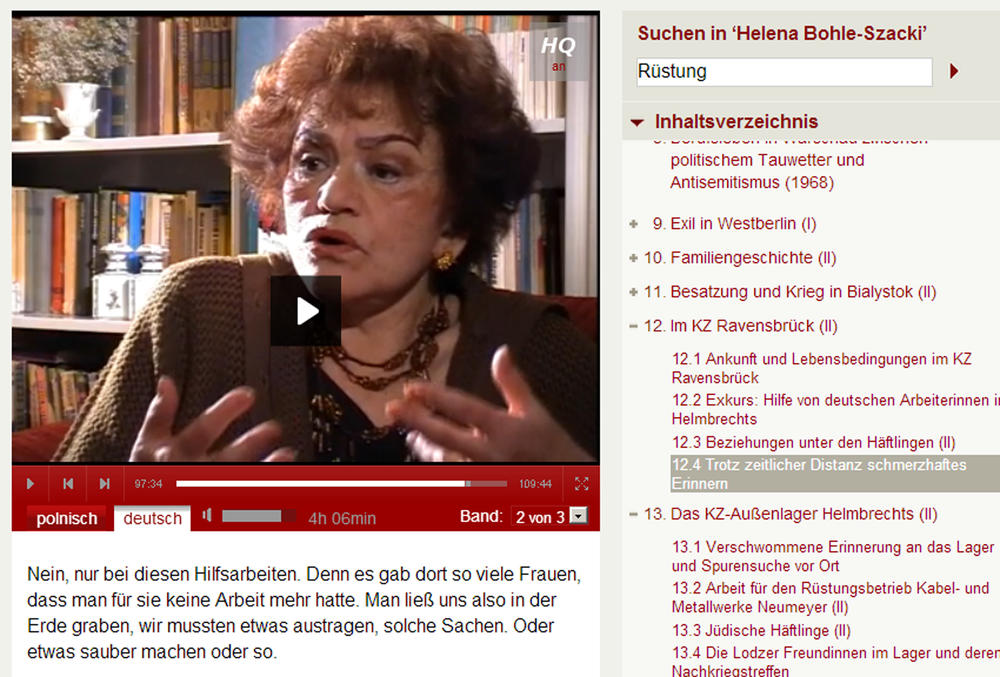
Various search options (persons, metadata and full-text search) allow a directed access to the interviews, complemented by additional materials. Students, researchers, but also pupils can search within the interviews according to sub collections, groups, places or specific experiences and watch or listen to the search results online. A selective thematic access to individual parts of the interviews is possible. In the future, functions for collaborative working (Web 2.0) will be provided as well.
Translation
The interviews in 25 languages shall be completely translated into German for an easy use in the field of education and research. The Department for the History of Eastern Central Europe at the Institute for Eastern European Studies at the Freie Universität Berlin is coordinating the translation and editing the transcripts.
Segmentation and Indexing
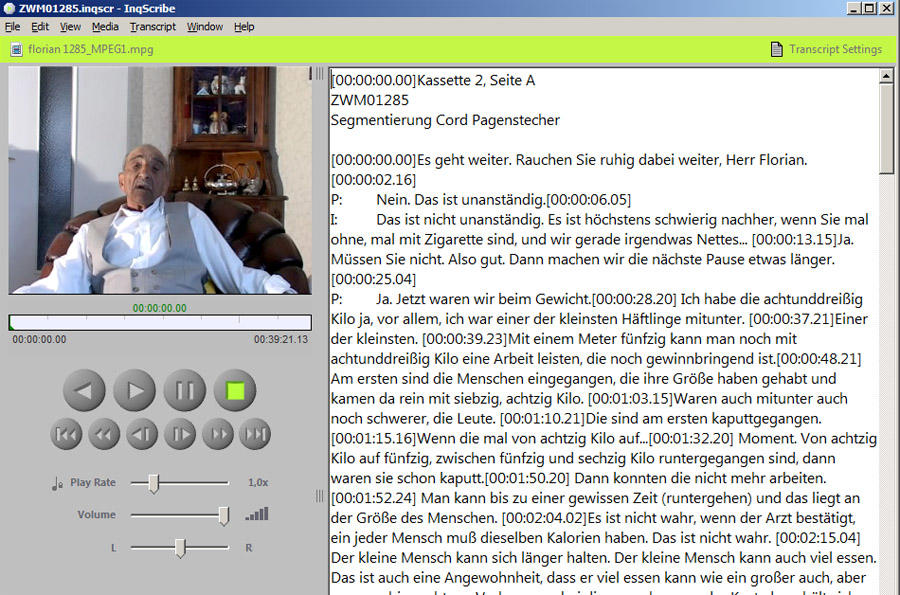
Indexing is defined as a content-related preparation of the interviews. Content-based indexing enables targeted searching that leads directly to individual passages of the interview. The prerequisite for this activity is the segmentation of the interviews, meaning the linkage of transcript and media file based on timecodes.
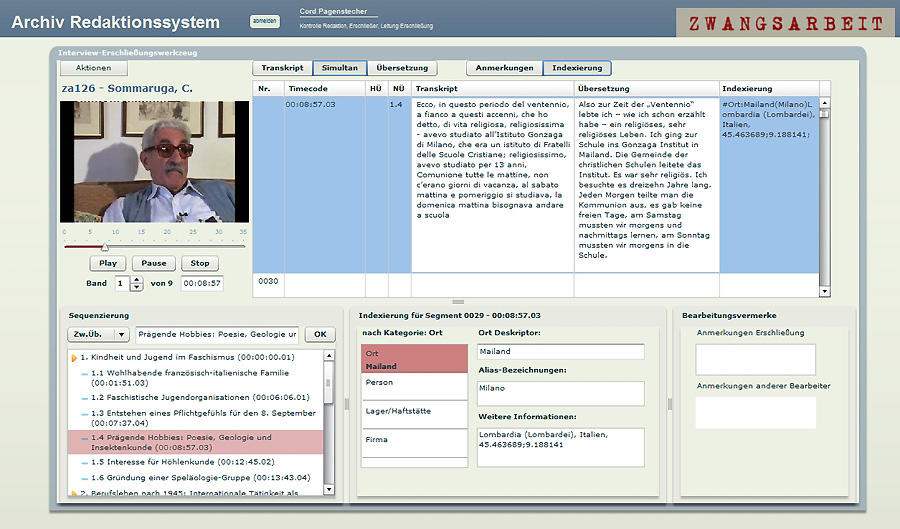
In a web-based editing system, the interviews are indexed according to places, camps, companies and persons and structured by main- and sub-headings. Short biographies and personal data of the witnesses are being reviewed. As a result, biographical data, tables of contents and specific registers enable the orientation and search within the comprehensive biographical interviews. This procedure enables the linkage between different testimonies, for example about the same camp.
Segmentation and indexing of the interviews is being coordinated at the Center for Digital Systems at the Freie Universität Berlin.
Historical and Political Education
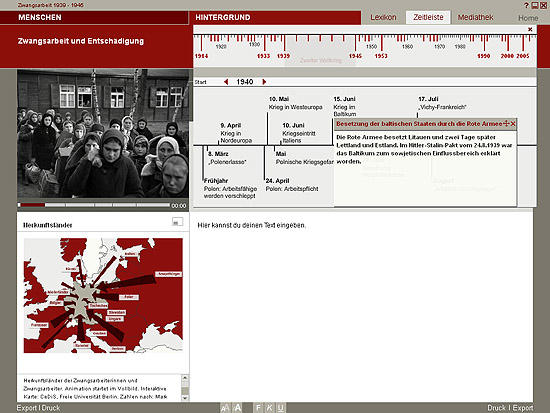
Some interviews from the online archive have been prepared for historical and political education. Teaching materials were created based on biographical short films: “Video Testimonies for School Education: Video-DVD - Learning Software - Teachers' Book" facilitate the use of the interviews in History classes during project days or presentations during examinations.
Selected interview excerpts are presented in the permanent exhibition of the German Historical Museum in Berlin as well as in other exhibitions and museums.